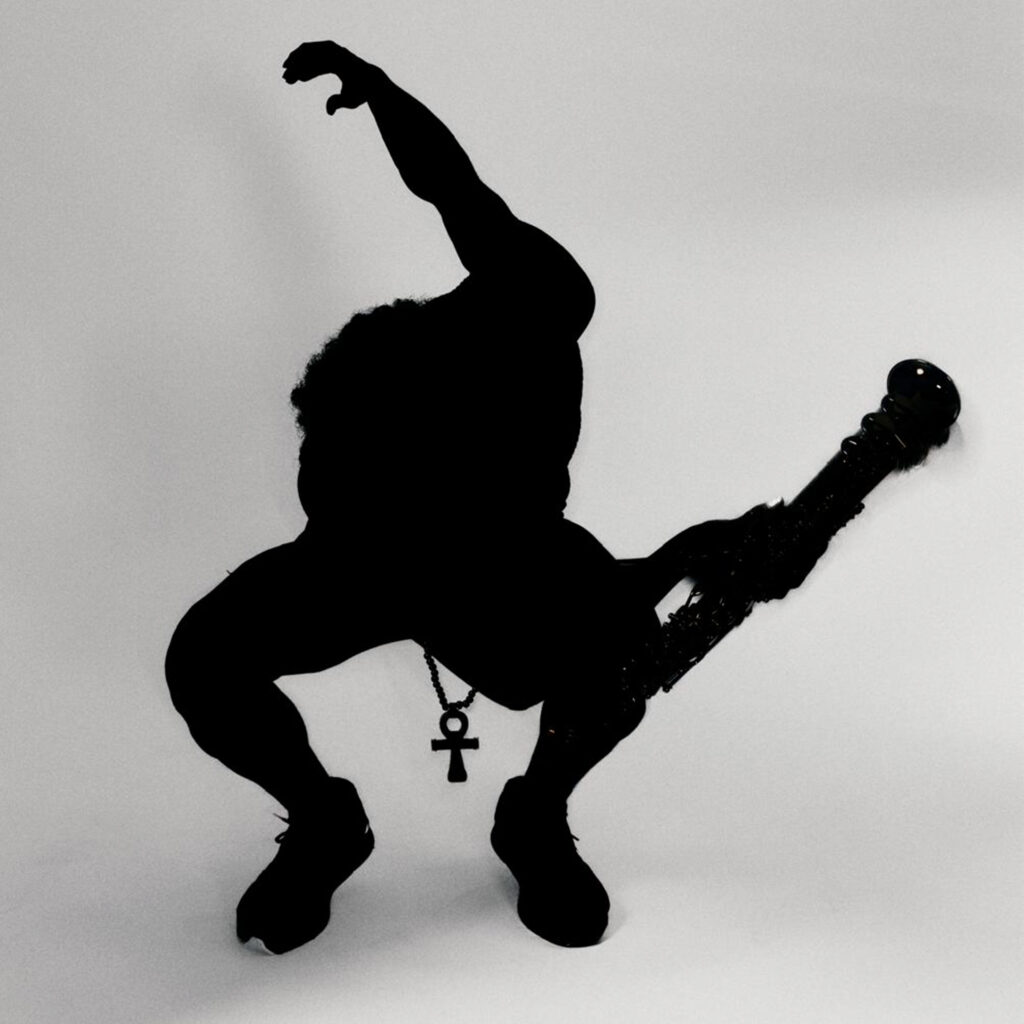
Drawing from their rich musical heritage while continually forging their own path, Sanders crafts immersive listening experiences that balance freedom, contemplation, and emotional depth.
Sanders tells us;
“‘Jazz Is Just a Game’ is my compositional response to a script that Black musicians have been expected to follow for generations: romanticized suffering, financial exploitation, addiction and mental health struggles, premature death, and the idea that an artist somehow becomes more valuable once they are gone.”
The composition is also a confrontation with the misogyny, homophobia, and transphobia that persist within parts of the culture. Particularly the ways Black women and Black queer artists have contributed profoundly to Black American Music without always receiving the same freedom, recognition, respect, or celebration.
Sanders prefers the term Black American Music rather than “jazz,” embracing a broader artistic canvas and the freedom to honor the lineage without being confined by the expectations attached to the genre. “Jazz Is Just A Game” embodies that philosophy: it draws from the history and imagination of Black music while refusing the idea that suffering must be its price of entry.
The track inhabits a surreal, dreamlike universe inspired in part by The Triplets of Belleville, the French animated film Sanders loved as a child. Within this strange, game-like world, larger-than-life figures evoke the spirits and legacies of Louis Armstrong, Sidney Bechet, and Ella Fitzgerald, artists whose extraordinary creativity helped define the possibilities of Black music. The characters appear to move through a world in which the rules have already been written, reflecting the systems in Jazz that are at the center of the composition.
The single features two artists whose own works embody a refusal to remain confined by the conventional definitions of Jazz.
Nicholas Payton, the New Orleans-born trumpeter, keyboardist, and singer, has spent decades challenging the boundaries of the tradition. A celebrated musician from a young age, Payton has explored acoustic post-bop alongside electronica, fusion, hip-hop, funk, R&B, and other musical languages.
Mélanie Charles brings an equally fluid and boundary-defying perspective. The Brooklyn-born, Haitian-descent singer-songwriter, actress, and flautist moves across jazz, soul, experimental music, and cultural traditions. Her work as D’flower combines flute, loops, samples, R&B, jazz, and Haitian folk sounds into a sonic collage that deliberately blurs boundaries between cultures, genres, genders, social classes, and artistic disciplines.
Together, Sanders, Payton, and Charles create a work that is as much about questioning the rules as it is about making music.